Save the Date
September 15th, 2026
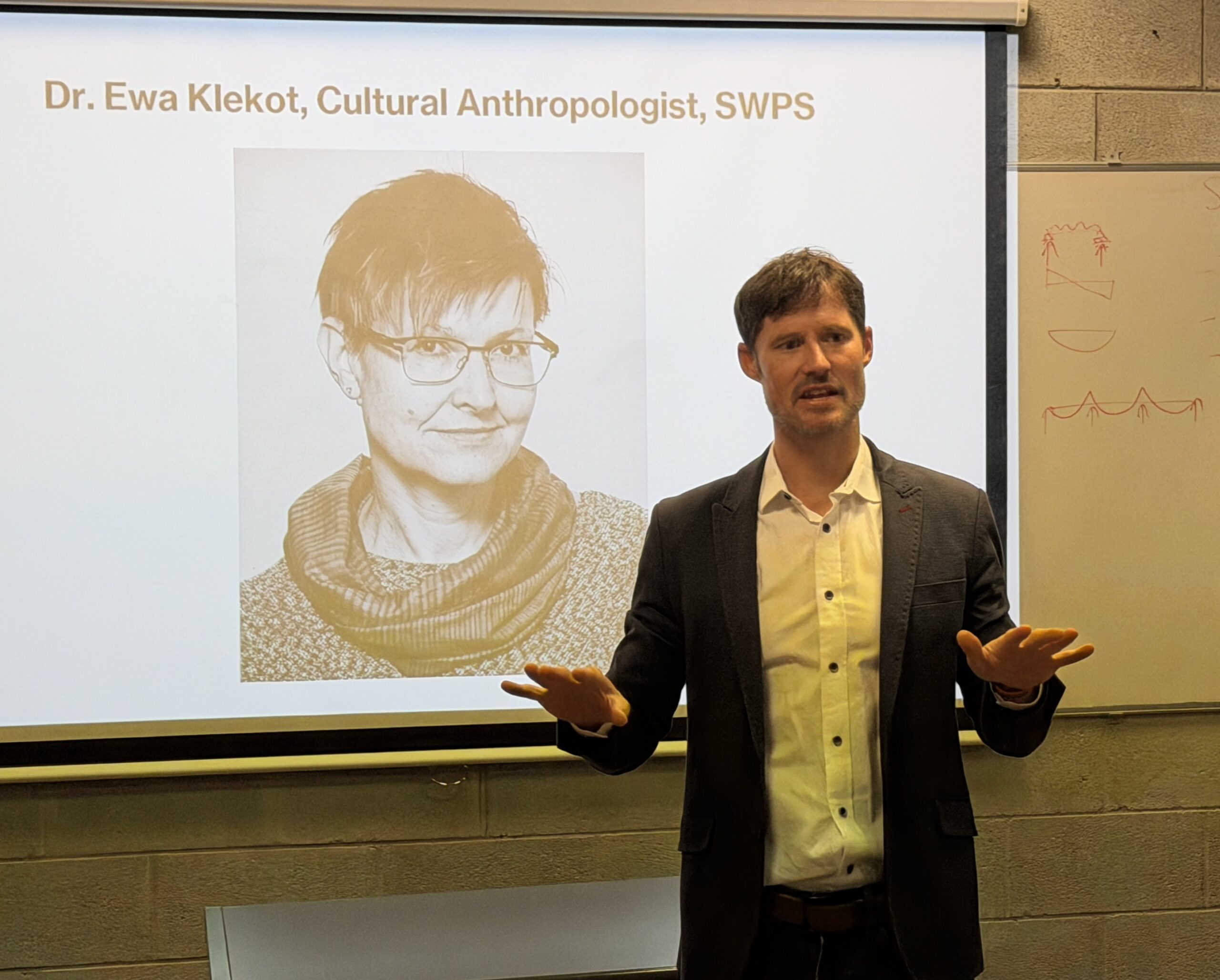
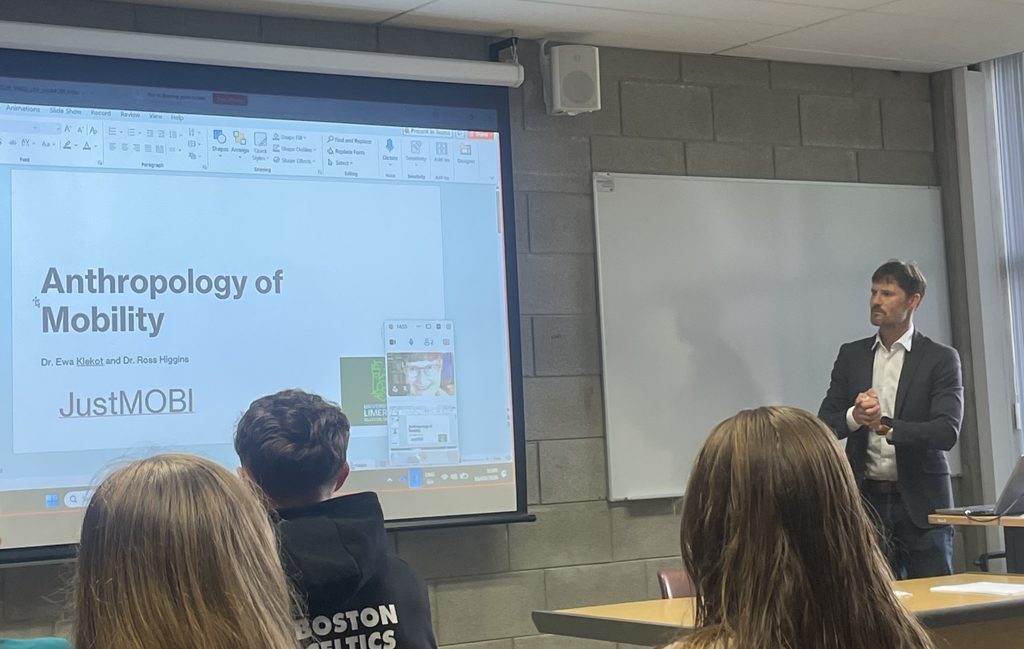
On September 15th, 2026, JustMOBI officially launched its Local Seminar programme, marking the beginning of a series of educational activities that will bring the project’s interdisciplinary approach to mobility into local university contexts across Europe. The first session took place at the University of Limerick, where Dr. Ross Higgins (UL) organised a two-hour lecture on the Anthropology of Mobility for third-year Civil Engineering students, delivered remotely by Dr. Ewa Klekot (SWPS). Around 30 students took part in the session, gaining a human-centred and interdisciplinary perspective on how people experience movement within transport systems.
Curriculum development is at the core of the JustMOBI project and the first component, a lecture on the Anthropology of Mobility, was designed and delivered by Dr. Ewa Klekot (SWPS) to a cohort of students at the University of Limerick (UL). The session formed part of the Transport Planning & Design module for third-year Civil Engineering students, led by Dr. Ross Higgins, and offered a unique opportunity to explore mobility from a human-centred and interdisciplinary perspective.
A Cross-Border Lecture on Mobility
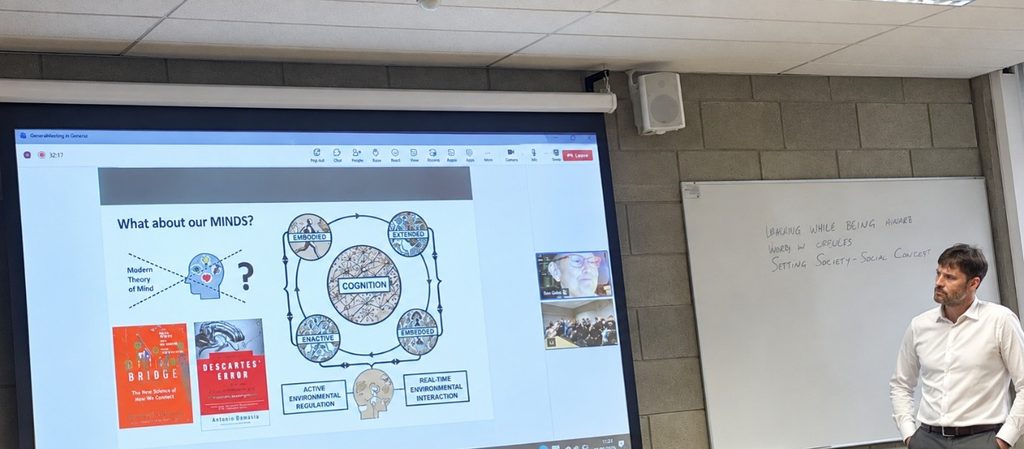
The two-hour session was organised by Dr. Ross Higgins and connected students in Limerick with Dr. Ewa Klekot in Warsaw, Poland through Microsoft Teams. Around 30 students participated in the lecture, which introduced key concepts from the anthropology of mobility and challenged students to reconsider how people and other living beings experience movement within transport systems.
Following an introduction to the JustMOBI project and its partners, Dr. Klekot delivered a lecture exploring themes such as micromobility, embodied movement, cognition, and the relationship between mobility and the built environment. Students were encouraged to reflect on the idea that modern societies are often transported rather than truly mobile, spending much of their time sitting within vehicles and other “capsules” that shape their engagement with the world. The lecture also examined how cultural practices influence movement, posture, and interaction with urban spaces, while highlighting theories that position movement as central to human experience and learning.
A particularly engaging aspect of the lecture was its emphasis on understanding mobility as a network of interconnected relationships, or “meshworks“. Drawing on examples ranging from human behaviour to the famous slime mould transport network experiment based on Tokyo’s rail system, students were invited to think beyond conventional transport engineering approaches and consider mobility as a complex social and ecological phenomenon.
From Wheelchairs to Wildlife: Rethinking Who Transport Is For
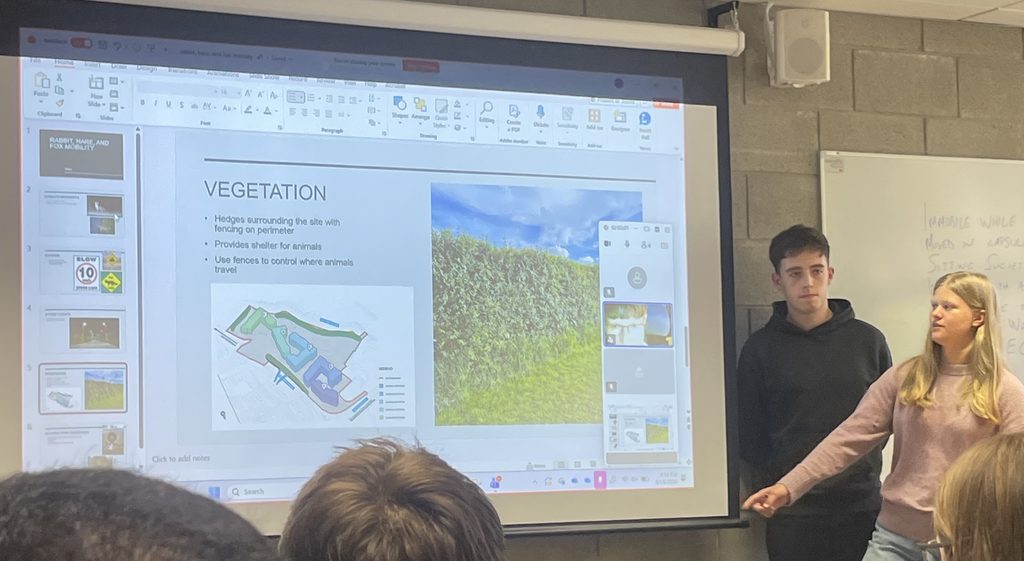
The lecture was followed by an interactive group exercise designed to apply these concepts to a real-world transport planning context. Working in seven teams, students investigated the mobility characteristics, habits, preferences, and needs of a diverse range of users. These included private car users, professional delivery drivers, micro-mobility users, pedestrians, wheelchair users, caregivers with buggies, and even local wildlife such as foxes, rabbits, hares, swans, gulls, robins, and blackbirds. Each group was asked to consider how the needs of their assigned stakeholders could be accommodated as part of their access (junction) design project which is part of their semester-long Integrated Design Project.
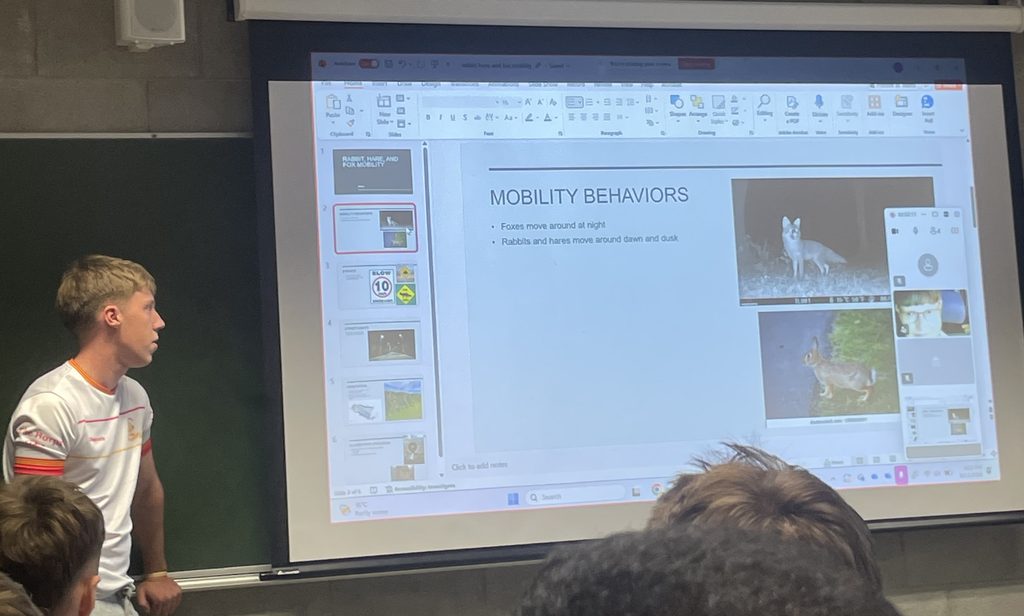
Students then presented their findings to both Dr. Higgins and Dr. Klekot, sharing their research and proposed design considerations through short presentations. The activity encouraged participants to move beyond traditional engineering calculations and engage with broader questions of inclusion, accessibility, behaviour, and environmental impact in transport design. Feedback from the presenters highlighted the creativity and critical thinking demonstrated by the student teams.
A New Perspective on Transport Engineering
Reflecting on the session, Dr. Higgins noted that while transport engineering often focuses on technical topics such as pavement design, traffic modelling, and junction capacity calculations, the Anthropology of Mobility lecture encouraged students to consider transport systems from a much wider perspective. By examining the needs of diverse users, including non-human species, students gained valuable insight into how transport infrastructure can be designed in ways that are more inclusive, responsive, and socially aware.
This successful pilot session marks an important step in the JustMOBI curriculum development process, demonstrating the value of bringing social science perspectives into engineering education and fostering new ways of thinking about mobility, transport, and the communities they serve.
