Save the Date
November 9th, 2026 - November 10th, 2026
Fab Lab Barcelona – IAAC has launched its JustMOBI Local Seminar, Hacking Urban Mobility. Students, researchers and practitioners are exploring how people experience the city, and how design, technology and citizen science can reveal and address inequalities in urban mobility.
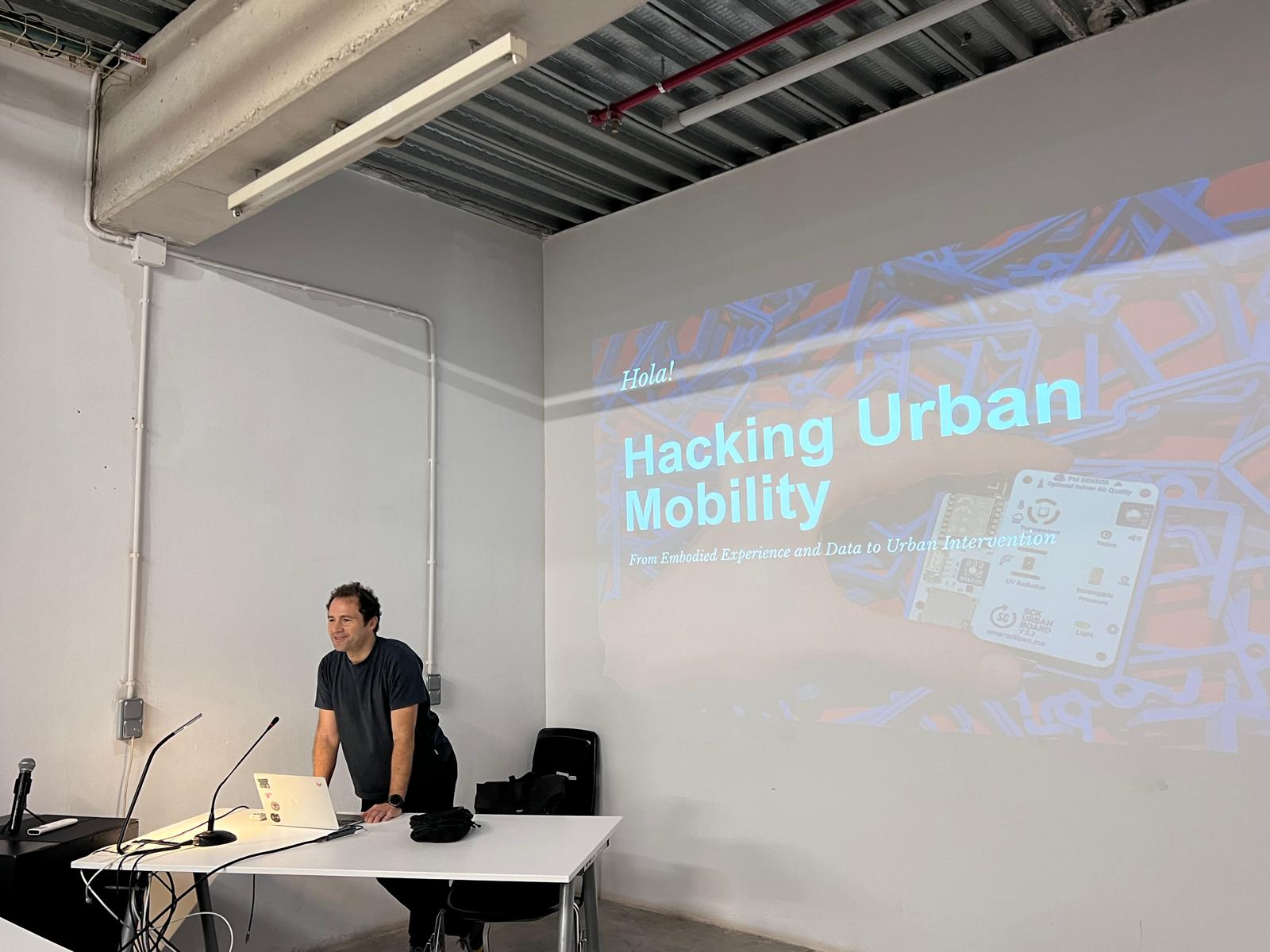
On 9 November 2026, Fab Lab Barcelona – IAAC launched its JustMOBI Local Seminar in Barcelona with the first sessions of Hacking Urban Mobility: From Embodied Experience and Data to Urban Intervention. The course brings together students, researchers and practitioners to explore how people experience and navigate the city, and how design, technology and citizen science can help identify and address inequalities in urban mobility.
The seminar is part of JustMOBI, a European Erasmus+ project that brings together five institutions to develop new approaches to mobility education, connecting design, research, technology and inclusive urban development.
Starting with the body: an anthropology of mobility
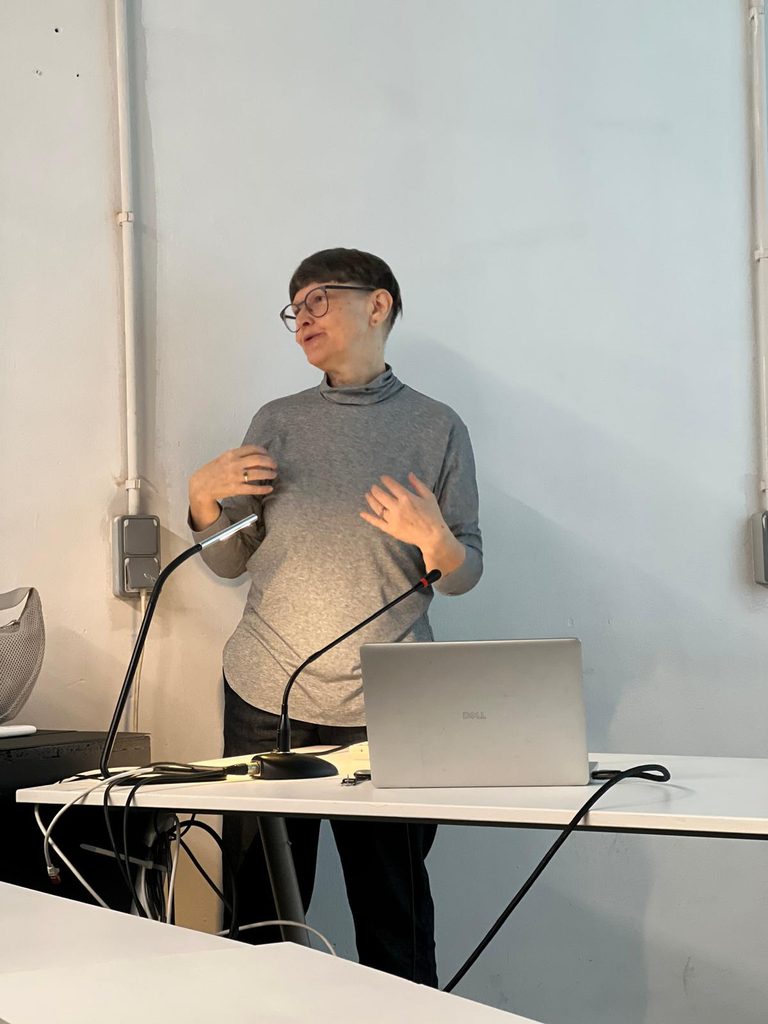
The seminar opened with a lecture by Ewa Klekot, art anthropologist from SWPS University, who travelled to Barcelona together with Izabela Boloz, also from SWPS, to contribute to the course.
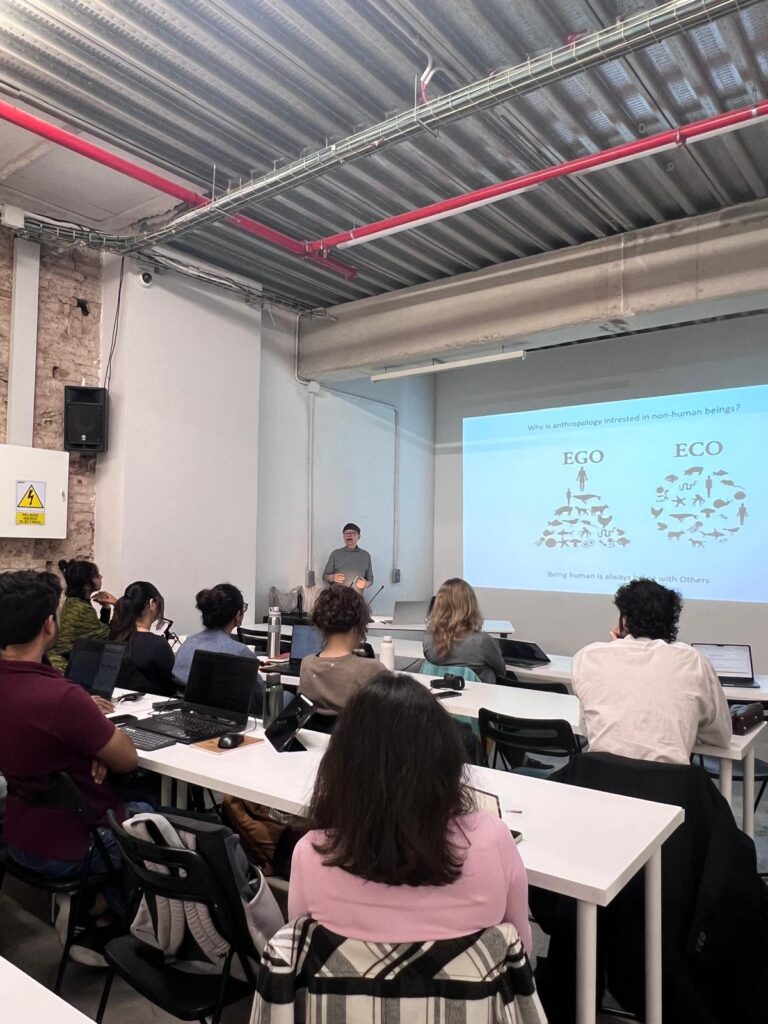
Their opening session, An Anthropology of Mobility: Body, Senses and Urban Experience, introduced students to mobility as more than simply moving between destinations. Drawing on anthropological perspectives, the lecture explored the paradox of contemporary society as both increasingly mobile and increasingly sedentary — a “sitting society” in which transport technologies often separate people from the environments through which they move.
The session invited students to consider mobility as an embodied and multisensory experience, paying attention to the role of the senses, bodily awareness, balance and movement. It also introduced the distinction between networks and meshworks as a way of understanding the relationships between bodies, infrastructures and urban environments.
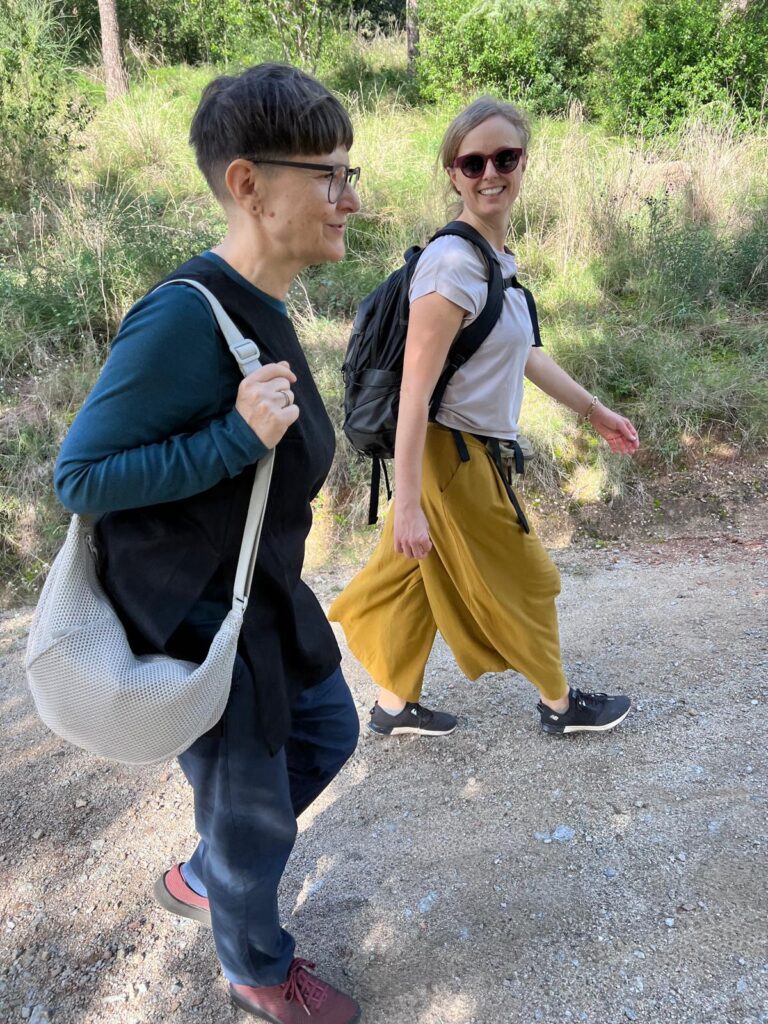
Following the lecture, Ewa Klekot and Izabela Boloz led a practical group activity that brought these ideas into the streets of Barcelona. Students were divided into five groups and assigned different locations around the city, approximately 15 minutes from the university. Each group chose its own route and mode of transport, while students individually documented their journeys through a multisensory observation framework.
Back in the classroom, groups brought together their observations and presented how different ways of moving can produce different perceptions and experiences of the same urban environment. The exercise encouraged students to look beyond conventional transport routes and consider the physical, sensory and environmental conditions that shape everyday journeys.
Questioning the default user
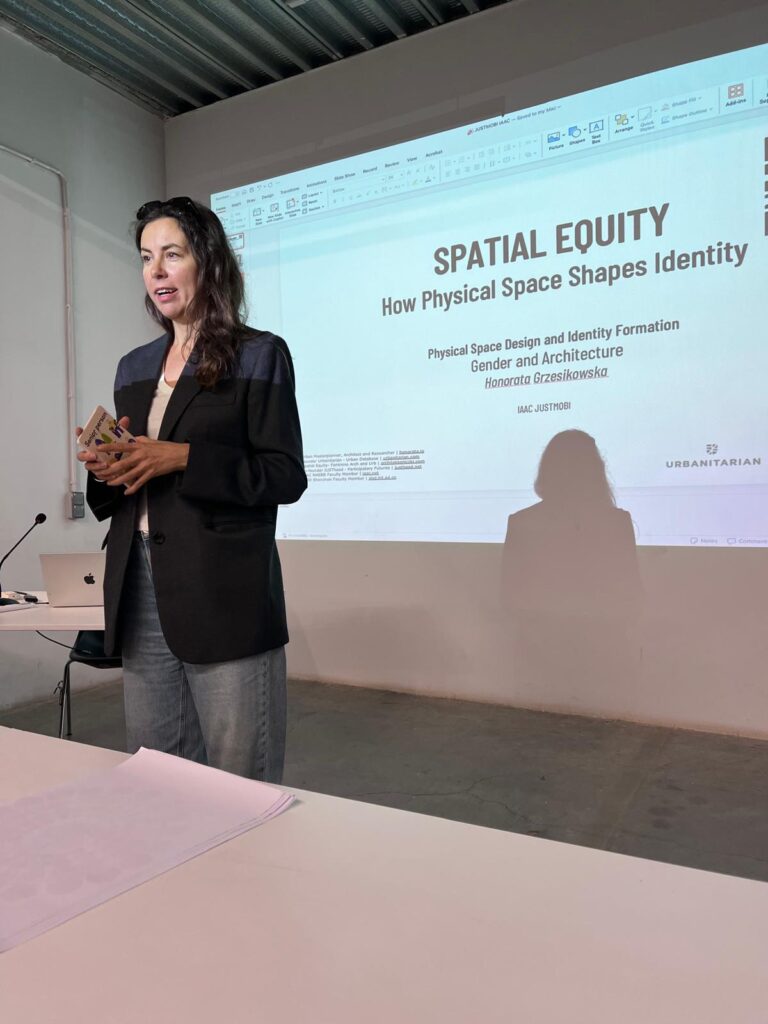
On 10 November, the seminar continued with Honorata Grzesikowska from Architektoniczki, who led the session Stereotypes, Bias and the Default User.
The session introduced students to gender-sensitive mobility and feminist urbanism, examining how assumptions about the “typical” or “default” user influence urban planning and transport systems. Drawing on the work of researchers and practitioners such as Dolores Hayden, Leslie Kern and Inés Sánchez de Madariaga, it explored how everyday mobility patterns differ depending on people’s responsibilities, circumstances and access to the city.
Particular attention was given to the mobility of care: the everyday journeys associated with escorting others, shopping and running errands, which are often overlooked in transport statistics focused primarily on commuting. Students also explored trip chaining — journeys involving multiple stops and destinations — and how conventional transport networks can fail to accommodate these patterns.
The session addressed the gender data gap and intersectionality, highlighting how different forms of disadvantage overlap and shape people’s experiences of urban space. Examples of gender-mainstreaming practices, including Vienna’s Fair Shared City approach, helped connect these critical perspectives to concrete urban policies and interventions.
From embodied experience to urban intervention
Hacking Urban Mobility is structured as a 30-hour studio-based course, complemented by 10 hours of fieldwork. Over the coming months, until February 2027, students will work with a multidisciplinary group of faculty and practitioners across different areas of expertise.
The course follows a progression from embodied experience and situated observation to hypothesis development, citizen-science data collection and physical intervention. Students will investigate specific locations and mobility challenges in Barcelona, formulate research questions, collect and analyse data using tools such as sensors and Smart Citizen Kits, and connect their findings with open urban datasets.
In the final stage, they will translate their research into physical interventions in public space, experimenting with digital fabrication, basic electronics and prototyping to adapt or “hack” existing elements of the urban environment.
Throughout the course, gender, care and accessibility provide a common lens for examining whose mobility is supported, whose needs remain invisible and how urban environments might become more inclusive.
The seminar brings together expertise from across the JustMOBI consortium and beyond, including contributions from SWPS University, Architektoniczki, Lichen, Tim Cowlishaw and Axolot, alongside the coordination of Fab Lab Barcelona – IAAC.
Connecting student work to the European network
The course will conclude with Final Student Presentations, where students will share their projects and findings with invited members of the JustMOBI consortium, faculty, practitioners and members of the project’s External Advisory Board (EAB). These presentations will provide an opportunity to discuss the work developed in Barcelona, exchange perspectives and connect students’ projects with the wider European conversation on inclusive and sustainable urban mobility.
Through this Local Seminar, Fab Lab Barcelona – IAAC contributes to JustMOBI’s broader goal of rethinking how mobility is understood and taught, combining critical perspectives with situated research, citizen-generated data and hands-on experimentation.
